
Building Team Chemistry: Drills and Habits That Work
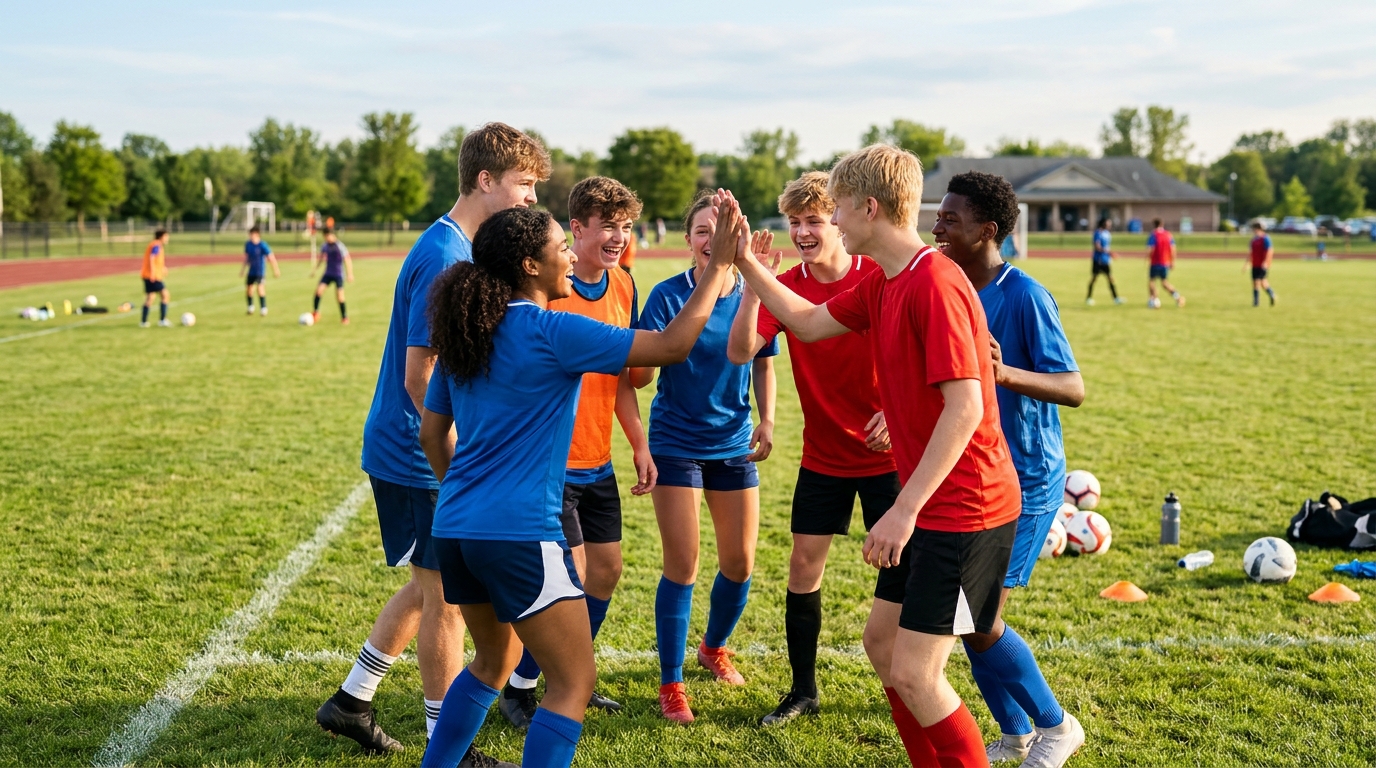
Great team chemistry is not about forcing friendships or hoping players naturally click. It is built through consistent coaching habits, clear standards and training activities that make communication, trust and shared responsibility part of everyday sport.
For youth and amateur coaches, chemistry matters even more than complex tactics. Players who feel safe, valued and connected are more likely to listen, recover from mistakes and work for one another when a match gets difficult.
Start With Clear Team Standards
Chemistry starts with how the group behaves, not with a one-off bonding activity. Create a short set of team standards with player input at the start of the season. Keep them practical and easy to remember.
For example, your standards could include:
- Encourage, do not blame after mistakes.
- Communicate early and clearly during drills and games.
- Arrive ready with the right kit, water and attitude.
- Respect every role on the squad, including substitutes and volunteers.
- Leave training better than you found it by helping collect equipment.
Ask players what these standards look and sound like in real situations. Instead of simply saying “be positive,” agree on phrases they can use: “Good idea,” “next one,” “I’ve got you,” or “keep talking.” Revisit the standards briefly each week and praise players when they demonstrate them.
Use Communication Drills With a Purpose
Players do not automatically become good communicators by being told to “talk more.” Build communication into drills, then give players specific prompts for what to say.
The silent warm-up is a simple starting point. Run a familiar passing or movement drill with no talking allowed for one round. Then repeat it with active communication. Ask the team what changed. Most groups immediately notice better timing, awareness and confidence when teammates use clear calls.
Try these practical chemistry-building drills:
- Partner mirror drill: In pairs, one player leads movements while the other mirrors them. Switch leaders every 30 seconds. This develops focus, non-verbal awareness and mutual respect.
- Numbers-up challenge: Set up a small-sided game where one team has an extra player. Award bonus points for successful passes or actions after a player gives useful information, such as calling for space or identifying an opponent.
- Blindfold guidance: In a safe, controlled area, one player closes their eyes or wears a blindfold while a partner guides them through cones using verbal instructions. Keep distances short and prioritise safety. Debrief how clear instructions created trust.
- Problem-solving relay: Give small groups an equipment-based challenge, such as moving balls or cones across an area without using hands. Rotate captains so different players practise leading and listening.
The debrief is as important as the drill. Ask: “What helped your group succeed?” “When did communication break down?” and “What can we use in a game?”
Rotate Leadership Responsibilities
Team chemistry suffers when the same confident players make every decision. Give every athlete a chance to contribute, especially quieter players who may lead in less obvious ways.
Create rotating weekly roles, such as:
- Warm-up leader
- Equipment manager
- Welcome buddy for new players
- Positive-energy captain
- Cool-down leader
- Team huddle speaker
These roles do not need to be major responsibilities. Their value is in showing players that everyone has a place in the group. For younger teams, provide simple prompts and support. For older amateur players, let them design parts of the warm-up or lead a tactical discussion.
Make Reflection a Weekly Habit
A five-minute reflection can strengthen chemistry more than an occasional team social. End one training session each week with a quick circle or small-group conversation.
Use questions such as:
- Who helped you today, and how?
- What did the team do well together?
- What is one thing we can improve next time?
- Who showed great effort or encouragement?
Keep feedback balanced and specific. “Sam was supportive” is less useful than “Sam encouraged me after I missed a shot and told me where to move next.” This teaches players what positive teammate behaviour actually looks like.
Handle Mistakes in the Right Way
Players copy the coach’s emotional response. If you react angrily to errors, teammates are more likely to blame each other. If you treat mistakes as information, the group learns to stay connected under pressure.
Use a consistent reset routine after errors:
- Acknowledge the moment: “That did not work.”
- Identify one adjustment: “Check your shoulder earlier.”
- Reinforce confidence: “You will get another chance.”
- Move on quickly: “Reset and play.”
Teach players to use the same approach with one another. A strong team does not ignore standards, but it addresses problems without embarrassment or personal criticism.
Build Connection Beyond Match Day
You do not need expensive trips to create belonging. Small, inclusive moments are often more effective. Celebrate birthdays, welcome new players properly, share a player-of-the-week recognition for effort or teamwork, and organise occasional low-pressure activities after training.
Use your club management platform to keep communication organised, share team values, recognise contributions and ensure every family receives the same information. Consistency off the field supports trust on it.
Measure Progress, Not Popularity
Chemistry is visible in behaviour. Look for players communicating before problems happen, substitutes supporting those on the field, teammates responding well to setbacks and players taking responsibility without being asked.
Choose one team habit to improve every two weeks. Keep it simple, practise it deliberately and celebrate evidence of progress. Over time, these small repeated actions create a team culture where athletes feel connected, confident and ready to compete for each other.
Run your club with SphereHyx
Teams, attendance, payments and tournaments — all in one place. Free to start.
Create your club free