
The Pre-Game Routine That Gets Teams Focused and Ready
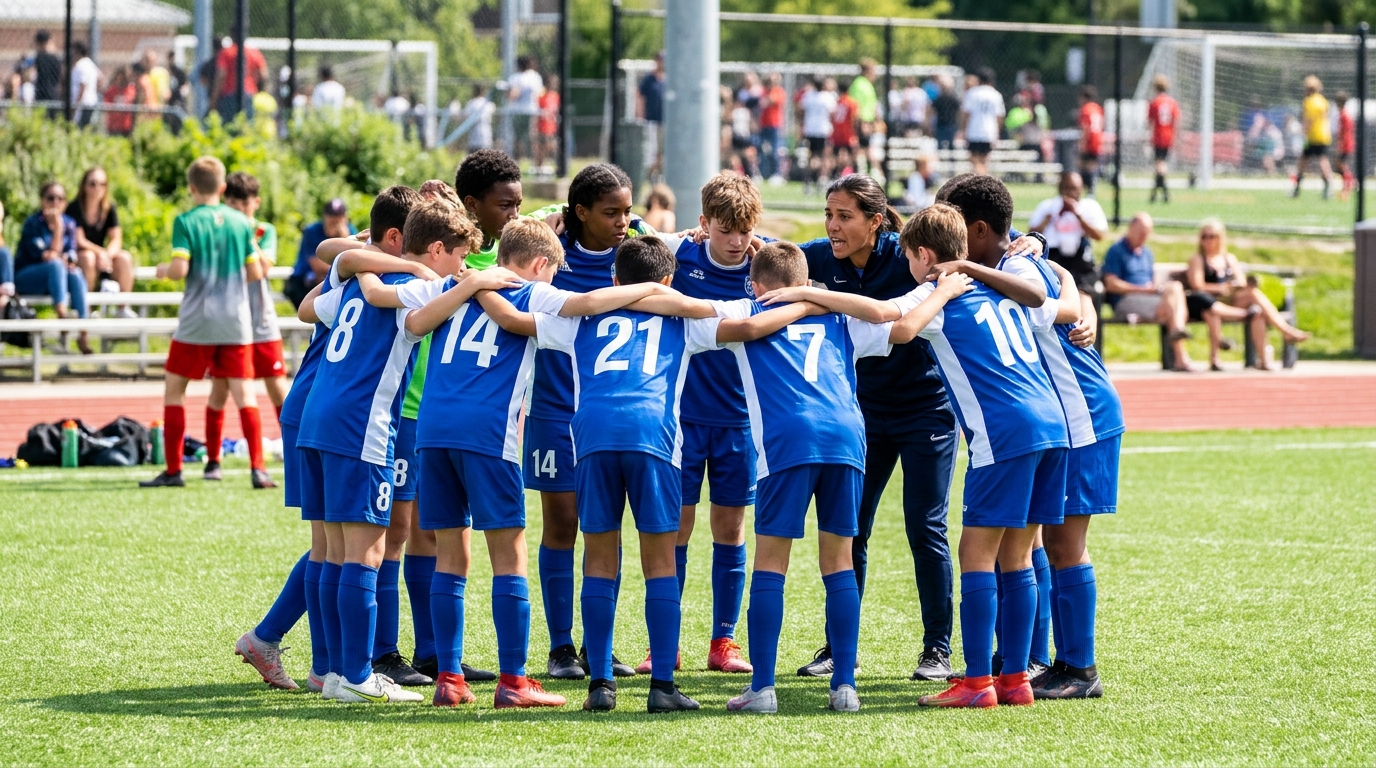
A great pre-game routine does not need to be long, loud or complicated. For youth and amateur teams, the best routines create calm, clarity and connection before the whistle.
Players perform better when they know what to expect. A repeatable sequence reduces nerves, prevents last-minute chaos and helps every athlete switch from school, work or travel mode into game mode. The goal is not to create a perfect team speech. It is to give players a reliable process they can trust.
Start with a simple arrival standard
Your routine starts before the team talk. Set a clear arrival time and make the first 10 minutes predictable. Players should know where to go, what to do and when they need to be ready.
A practical arrival standard might include:
- Arrive 45 to 60 minutes before the game, adjusted for your sport and venue.
- Check in with a coach, captain or team manager.
- Put equipment and bags in a designated area.
- Hydrate, use the restroom and address any kit issues early.
- Keep phones away or on silent once the warm-up begins.
Avoid spending the opening minutes chasing missing players, answering repeated questions or looking for equipment. Use your club communication platform, such as SphereHyx, to share arrival times, venue details, squad lists and kit requirements well before game day.
Use a short check-in to read the room
Youth and amateur athletes arrive with different energy levels. Some are excited, some nervous and some may be distracted by school, family or work. A quick check-in helps coaches spot issues without turning the changing room into a long discussion.
Try a one-word or one-number check-in. Ask players to describe their energy in one word, or rate it from one to five. This gives quieter athletes a simple way to participate and lets you adjust your approach.
For example, if the group seems flat, use more movement and upbeat music. If players are highly anxious, slow the pace, simplify your message and focus on breathing and familiar actions.
Keep the check-in brief. You are gathering information, not conducting a meeting.
Deliver one clear tactical message
Pre-game talks often become overloaded with instructions. Coaches want to cover the opponent, set pieces, roles, substitutions and motivation. Players usually remember only a small portion of it.
Instead, give the team one main tactical focus and two or three supporting reminders. Your message should be specific enough to guide decisions but simple enough to recall under pressure.
A football coach might say:
- Main focus: Win the ball back quickly after losing it.
- Reminder one: Stay connected in midfield.
- Reminder two: First pass after recovery is simple.
- Reminder three: Communicate early and loudly.
A basketball coach may focus on transition defence. A hockey coach may emphasise first-touch passing. Whatever the sport, connect the message to something the team has practised recently. Game day is not the time to introduce a completely new system.
Make warm-ups progressive and purposeful
A good warm-up prepares bodies and minds. It should move from general activity to sport-specific actions, with increasing intensity as the start time approaches.
A reliable structure includes:
- Raise: Light movement to increase body temperature.
- Mobilise: Dynamic movements for key joints and muscles.
- Activate: Short exercises that prepare the muscles used in competition.
- Rehearse: Sport-specific skills, patterns and communication.
- Compete: A brief, high-energy drill that matches game intensity.
Keep players active. Long lines, complicated instructions and excessive standing around reduce focus. Build in touches, decisions and communication wherever possible.
For younger teams, add a fun challenge or small competition. For older amateur teams, use realistic game scenarios. The final minutes of the warm-up should leave athletes feeling sharp, confident and physically ready—not exhausted.
Give players a personal focus cue
Team tactics matter, but every player also needs an individual anchor. Ask athletes to choose one controllable action for the game.
Examples include:
- “I will communicate on every defensive play.”
- “I will sprint back after turnovers.”
- “I will support the player on the ball.”
- “I will reset quickly after mistakes.”
These cues shift attention away from uncontrollable outcomes such as winning, scoring or impressing others. They are especially valuable for nervous players, who may benefit from a clear action rather than a vague instruction to “be confident.”
Finish with calm confidence, not pressure
The final huddle should be short and intentional. Reinforce the team’s identity, restate the main focus and send players out with positive energy.
Avoid dramatic warnings, criticism or a long list of consequences. Statements like “Do not make mistakes” increase fear and rarely improve performance. Replace them with positive, actionable language: “Be brave on the ball,” “Trust your preparation,” or “Compete for each other.”
Then let the team play.
Review and refine the routine
A pre-game routine should evolve with your team. After matches, ask players what helped them feel ready and what felt rushed, distracting or unnecessary. Review practical details too: Were players on time? Did the warm-up fit the space? Did the tactical message show up in the game?
Track these notes in your coaching workflow and keep the routine consistent for several weeks before making major changes. The best routine is one your players can follow almost automatically.
When athletes arrive organised, understand their role and feel connected to teammates, they are far more likely to start games with purpose. Build a routine that is simple, repeatable and suited to your group—and make readiness part of your team culture.
Run your club with SphereHyx
Teams, attendance, payments and tournaments — all in one place. Free to start.
Create your club free